
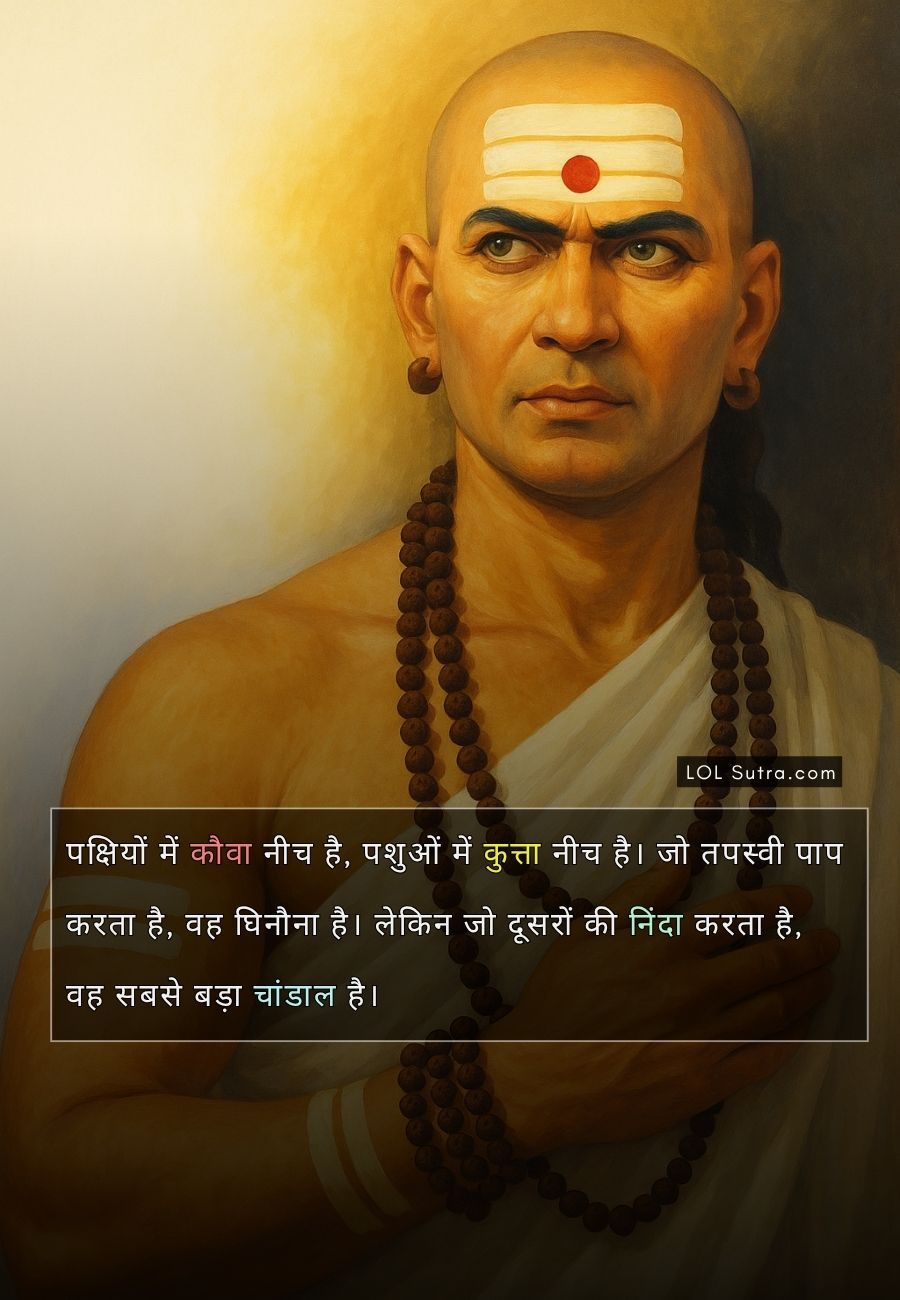
Chanakya यानी Acharya Vishnugupta / Kautilya, प्राचीन भारत के महान राजनेता, शिक्षक और अर्थशास्त्री थे। उनकी नीतियाँ सिर्फ़ राजनीति में ही नहीं, बल्कि जीवन, संबंध, व्यापार और सफलता के हर क्षेत्र में मार्गदर्शन करती हैं।
चाणक्य नीति अध्याय 8 हमें जीवन के असली मूल्यों की समझ देता है — जैसे विद्या, आचरण, संयम और संतोष। इस अध्याय में आचार्य चाणक्य बताते हैं कि असली दौलत सम्मान है, और असली सुंदरता नीति और चरित्र में बसती है।
चाणक्य नीति क्या है?
About Chanakya
Chanakya (c. 375–283 BCE) नंद वंश के पतन और चंद्रगुप्त मौर्य के उदय के पीछे का master strategist थे।
वे Takshashila University में आचार्य थे और उन्होंने Arthashastra तथा Chanakya Niti लिखी।
उनकी नीतियों का मुख्य उद्देश्य था —
- राजनीति, अर्थव्यवस्था और जीवन में सफलता पाना
- समाज और राज्य की स्थिरता
- व्यक्ति के चरित्र और निर्णय क्षमता को मजबूत करना!!
Chanakya Niti Chapter 8 | चाणक्य नीति : आठवाँ अध्याय
#1
नीच वर्ग के लोग दौलत चाहते हैं, मध्यम वर्ग के लोग दौलत और इज्जत, लेकिन उच्च वर्ग के लोग सम्मान चाहते हैं, क्योंकि सम्मान ही उच्च लोगों की असली दौलत है।
Low-class people desire wealth, the middle class desire both wealth and respect, but the noble seek only honor, for honor is their true wealth.
#2
दीपक अँधेरे का भक्षण करता है, इसलिए काला धुआँ बनाता है। उसी प्रकार, हम जिस प्रकार का अन्न खाते हैं — सात्विक, राजसिक या तामसिक — उसी प्रकार के विचार उत्पन्न करते हैं।
A lamp consumes darkness and produces black smoke. Likewise, the type of food we eat — pure (sattvik), passionate (rajasik), or ignorant (tamasik) — shapes the nature of our thoughts.
#3
हे विद्वान पुरुष! अपनी संपत्ति केवल योग्य पात्र को ही दे, और दूसरों को कभी न दे। जो जल बादल को समुद्र देता है, वह मीठा हो जाता है। बादल वर्षा करके वह जल पृथ्वी के सभी चल-अचल जीवों को देता है, और फिर उसे समुद्र को लौटा देता है।
O wise one, give your wealth only to the deserving, never to the unworthy. The water given by the sea to the clouds turns sweet, nourishes all beings when it rains, and finally returns to the sea enriched a thousandfold.
#4
विद्वान लोग, जो तत्त्व को जानने वाले हैं, उन्होंने कहा है कि मांस खाने वाले चांडालों से हजार गुना नीच हैं। इसलिए ऐसे आदमी से नीच कोई नहीं।
The wise, who understand the essence of life, declare that the meat-eater is lower than a thousand outcasts; thus, none is more degraded than him.
#5
शरीर पर मालिश करने के बाद, श्मशान में चिता का धुआँ शरीर पर आने के बाद, सम्भोग करने के बाद, या दाढ़ी बनाने के बाद — जब तक आदमी नहा न ले, वह चांडाल कहलाता है।
After applying oil, being near the smoke of a cremation ground, after sexual activity, or shaving, a person remains impure until they bathe.
#6
जल अपच की दवा है। भोजन पच जाने के बाद पानी पीना चैतन्य देता है। भोजन के बीच में पानी अमृत समान है, लेकिन भोजन के तुरंत बाद पानी पीना विष के समान है।
Water cures indigestion. Drinking it after food is digested brings energy, during meals it acts like nectar, but immediately after eating, it works like poison.
#7
यदि ज्ञान का उपयोग न किया जाए तो वह खो जाता है। आदमी अज्ञान से खो जाता है। सेना सेनापति के बिना खो जाती है, और पत्नी पति के बिना खो जाती है।
Knowledge fades if not applied; ignorance destroys a man. An army without a leader is lost, and a wife without her husband is unprotected.
#8
वह आदमी अभागा है जो अपने बुढ़ापे में पत्नी की मृत्यु देखता है; वह भी अभागा है जो अपनी सम्पदा संबंधियों को सौंप देता है; और वह भी अभागा है जो खाने के लिए दूसरों पर निर्भर रहता है।
Unfortunate is the man who loses his wife in old age, entrusts his wealth to relatives, or depends on others for food.
#9
यह बातें व्यर्थ हैं — वेद मंत्रों का उच्चारण करना लेकिन यज्ञ न करना; यज्ञ करना लेकिन बाद में दान न देना। पूर्णता तो भक्ति से ही आती है, क्योंकि भक्ति ही सभी सफलताओं का मूल है।
It is useless to chant Vedic hymns without performing sacrifice, or to perform sacrifice without charity. True perfection comes only through devotion, for devotion is the root of all success.
#10
एक संयमित मन के समान कोई तप नहीं, संतोष के समान कोई सुख नहीं, लोभ के समान कोई रोग नहीं, और दया के समान कोई गुण नहीं।
There is no penance like a controlled mind, no joy like contentment, no disease like greed, and no virtue like compassion.
#11
क्रोध साक्षात यम है, तृष्णा नरक की ओर ले जाने वाली वैतरणी है, ज्ञान कामधेनु है, और संतोष ही नंदनवन है।
Anger is death itself, desire is the river to hell, knowledge is the wish-fulfilling cow, and contentment is heaven.
#12
नीति की उत्तमता ही व्यक्ति के सौंदर्य का गहना है। उत्तम आचरण से व्यक्ति ऊँचे लोक में जाता है। सफलता ही विद्या का आभूषण है, और उचित विनियोग ही संपत्ति का गहना है।
Good conduct is the true ornament of beauty; righteous actions lead to higher worlds; success is the ornament of learning, and wise use is the ornament of wealth.
#13
नीति भ्रष्ट होने से सुंदरता का नाश होता है; हीन आचरण से अच्छे कुल का नाश होता है; पूर्णता न आने से विद्या का नाश होता है; और उचित विनियोग के बिना धन का नाश होता है।
Immorality destroys beauty, bad behavior ruins noble birth, incomplete learning wastes education, and unwise spending destroys wealth.
#14
जो जल धरती में समा गया वह शुद्ध है; परिवार को समर्पित पत्नी शुद्ध है; जो राजा प्रजा का कल्याण करता है वह शुद्ध है; और जो ब्राह्मण संतोषी है वह भी शुद्ध है।
Water that seeps into the earth is pure; a devoted wife is pure; a king who serves his people is pure; and a contented Brahmin is pure.
#15
असंतुष्ट ब्राह्मण, संतुष्ट राजा, लज्जा रखने वाली वेश्या, और कठोर स्वभाव की गृहिणी — ये सभी विनाश को प्राप्त होते हैं।
A dissatisfied Brahmin, a contented king, a shy prostitute, and a harsh housewife — all meet their downfall.
#16
क्या करना ऊँचे कुल का, यदि बुद्धिमत्ता न हो। नीच कुल में जन्मा विद्वान व्यक्ति देवताओं द्वारा भी सम्मानित होता है।
What use is high birth without wisdom? Even the gods honor a wise man born in a humble family.
#17
विद्वान व्यक्ति लोगों से सम्मान पाता है। विद्वान अपनी विद्वत्ता के लिए हर जगह सम्मान पाता है। यह बिलकुल सत्य है कि विद्या हर जगह सम्मानित है।
A wise person earns respect everywhere. Knowledge commands honor in every land — for learning is respected universally.
#18
जो लोग सुंदर हैं, जवान हैं, और ऊँचे कुल में जन्मे हैं — वे बेकार हैं यदि उनके पास विद्या नहीं है। वे पलाश के फूलों के समान हैं, जो दिखते तो सुंदर हैं पर महकते नहीं।
Those who have beauty, youth, and noble birth are worthless without knowledge — like the palash flowers, bright in color but without fragrance.
#19
यह धरती उन लोगों के भार से दबी जा रही है, जो मांस खाते हैं, दारू पीते हैं, और मूर्ख हैं — वे सब मनुष्य रूप में पशु हैं।
The earth groans under the weight of those who eat meat, drink alcohol, and live in ignorance — beasts in the form of men.
#20
उस यज्ञ के समान कोई शत्रु नहीं, जिसके उपरांत लोगों को बड़े पैमाने पर भोजन न कराया जाए। ऐसा यज्ञ राज्य को नष्ट कर देता है। यदि पुरोहित यज्ञ में ठीक से उच्चारण न करे तो वह स्वयं नष्ट होता है। और यदि यजमान दान न दे तो वह भी यज्ञ द्वारा नष्ट हो जाता है।
No enemy is like a sacrifice performed without feeding the people. Such a yajna destroys the kingdom. If the priest chants incorrectly, it destroys him; and if the host withholds charity, it destroys him too.
अध्याय 8 में बताया गया है कि ज्ञान का उपयोग ना किया जाए तो वह बेकार है, और लोभ, क्रोध, वासना जैसे दोष मनुष्य को पतन की ओर ले जाते हैं। चाणक्य यह भी कहते हैं कि सुंदरता या ऊँचा कुल किसी काम का नहीं अगर व्यक्ति के पास बुद्धि और चरित्र नहीं है। असली महानता विनम्रता, संयम और भक्ति में है।
अगला अध्याय जरूर पढ़ें!
चाणक्य नीति के अगले अध्याय में हम और भी महत्वपूर्ण जीवन सिद्धांतों और नीतियों पर चर्चा करेंगे, जो आपके चरित्र और व्यक्तित्व को और भी निखारेंगे। तो बने रहें हमारे साथ और पढ़ें “Chanakya Niti Chapter 9 in Hindi and English”, ताकि आप अपने जीवन में सफलता और समृद्धि के और भी मार्ग जान सकें।

 and then