
4 Memory Problems
And How To Fix Them
A simple guide to understand why your memory fails — and how to train it better.
Your memory is not broken. Most of the time, it is just overloaded, distracted, or poorly trained. Forgetting does not always mean your brain is getting weak. Sometimes it simply means you were not paying attention, you did not repeat the information enough, or your mind is holding too much at once.
Neuroscience explains that memory problems usually happen in four common ways: memories fade with time, attention slips, information gets blocked, or painful thoughts keep returning again and again. These are called transience, absent-mindedness, blocking, and persistence.
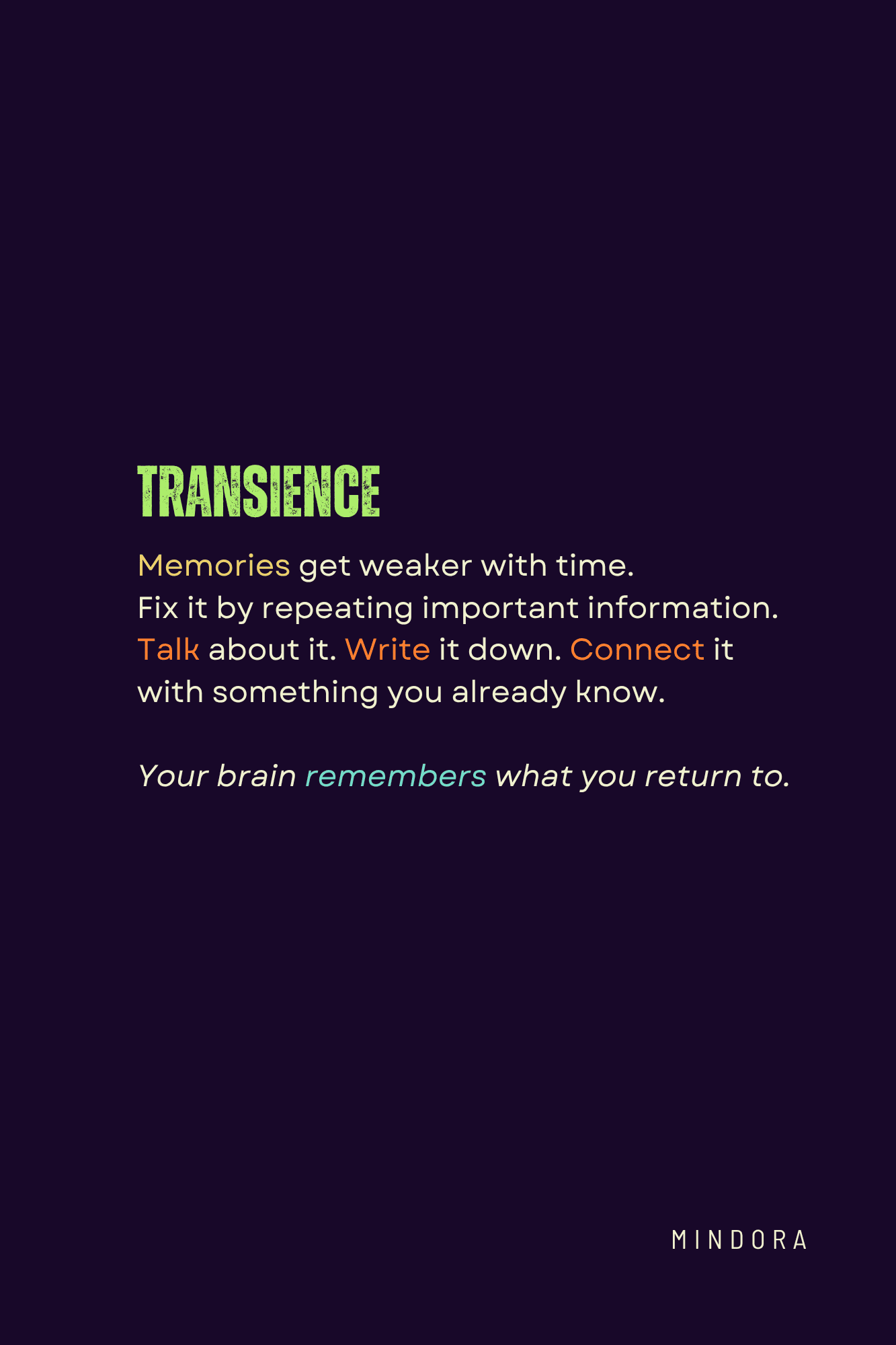

The first problem is transience. This means memories slowly fade over time. You read something, hear something, or learn something, but after a few days or weeks, it starts disappearing. The fix is not just reading more. The fix is returning to the information again. Connect new ideas with things you already know. Talk about them. Think about them. Repeat them after some time. Your brain remembers what you revisit.
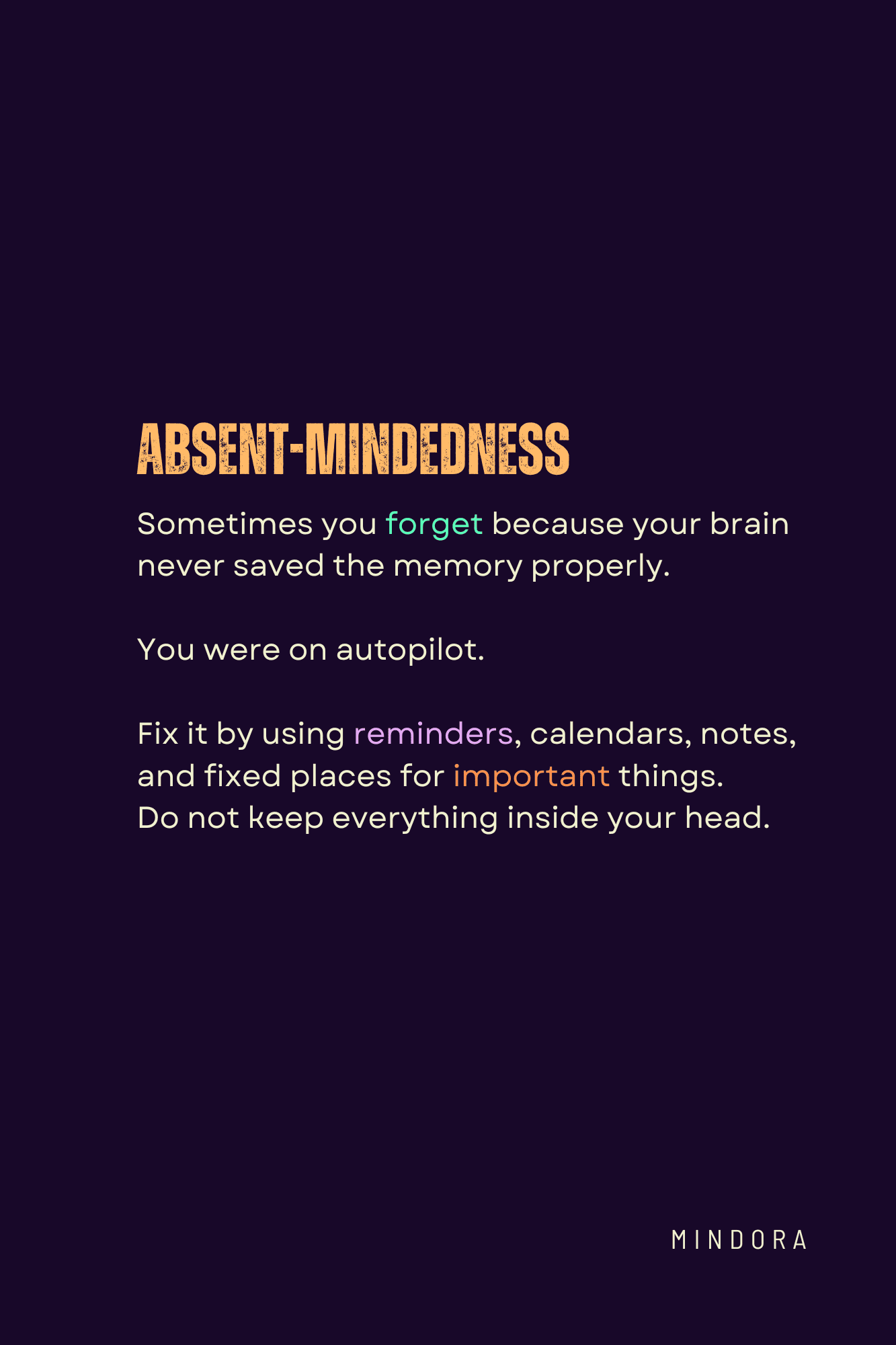
The second problem is absent-mindedness. This is when you forget where you kept your keys, miss a small task, or walk into a room and forget why you went there. Most of the time, this happens because the memory was never properly created. You were moving on autopilot, so your brain did not store the moment clearly. The solution is simple: pay attention on purpose. Keep important things in the same place, use reminders, write things down, and stop expecting your brain to hold everything alone.
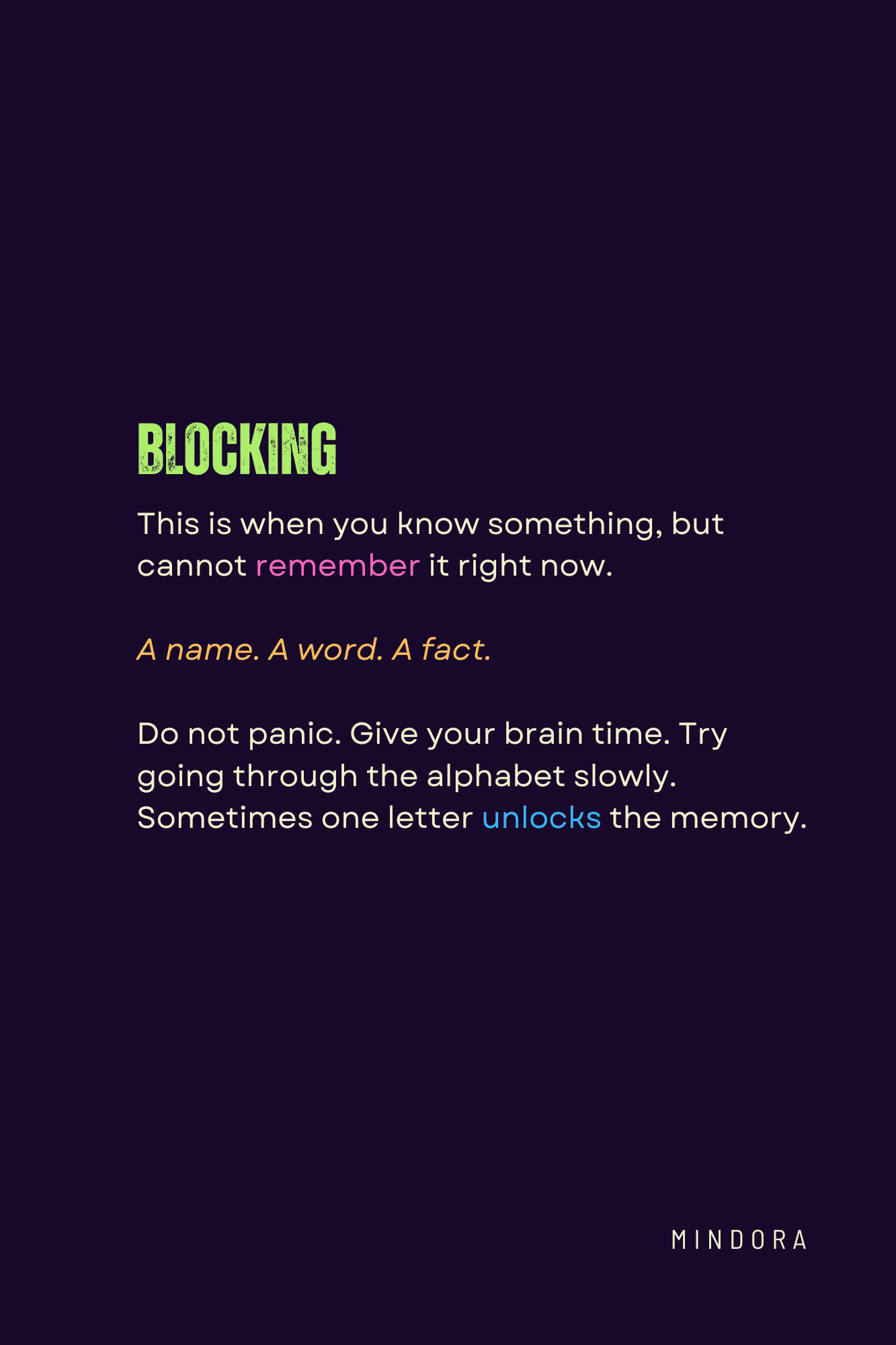
The third problem is blocking. This happens when you know something, but you cannot bring it out. A name, a word, or a fact gets stuck on the tip of your tongue. The information is inside, but your brain cannot access it at that moment. Do not panic. Give your mind a little time. Often, the answer returns by itself. You can also slowly go through the alphabet, because sometimes one letter is enough to unlock the memory.
The fourth problem is persistence. This is when your brain keeps replaying memories you want to forget. Old mistakes, regrets, embarrassing moments, painful conversations — they keep coming back even when you want peace. Trying to force these thoughts away usually makes them stronger. Instead, talk about them or write them down. Writing gives shape to the pain. It turns a mental storm into a story you can understand.
A better memory is not about remembering everything. In fact, remembering everything would be painful. A healthy mind knows what to keep, what to repeat, what to write down, and what to release.
“Your mind becomes clearer when you stop treating it like a storage room.“

 and then