
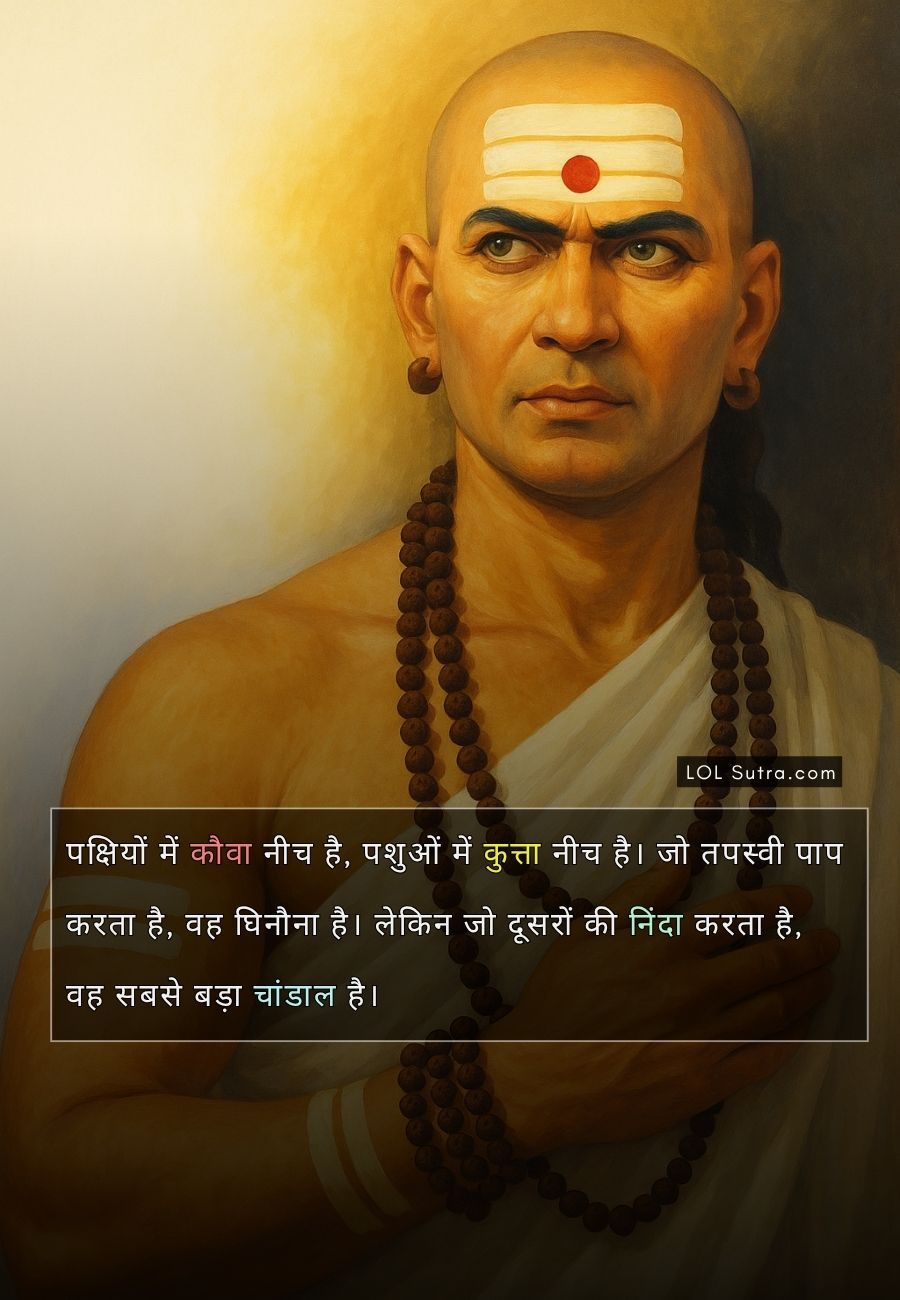
Acharya Chanakya once again shares profound wisdom in Chapter 10, focusing on knowledge, destiny, and right conduct. इस अध्याय में आचार्य कहते हैं कि जिसके पास विद्या है, वही असली राजा है, क्योंकि बुद्धि वह धन है जो कभी कम नहीं होता।
He emphasizes that fate can change everything, so we should neither be proud of our successes nor fear failure. इस नीति में यह भी बताया गया है कि बुरा व्यक्ति चाहे कितना भी सुधर जाए, उसका स्वभाव नहीं बदलता, और अच्छे संस्कार ही जीवन की असली पहचान हैं। Overall, यह अध्याय ज्ञान, आचरण और नियति की गहराई को समझने का एक अद्भुत संगम है — a perfect guide for leading a balanced, meaningful, and virtuous life.
चाणक्य नीति क्या है?
About Chanakya
Chanakya (c. 375–283 BCE) यानी Acharya Vishnugupta / Kautilya, नंद वंश के पतन और चंद्रगुप्त मौर्य के उदय के पीछे का master strategist, महान राजनेता, शिक्षक और अर्थशास्त्री थे। उनकी नीतियाँ सिर्फ़ राजनीति में ही नहीं, बल्कि जीवन, संबंध, व्यापार और सफलता के हर क्षेत्र में मार्गदर्शन करती हैं।
वे Takshashila University में आचार्य थे और उन्होंने Arthashastra तथा Chanakya Niti लिखी।
उनकी नीतियों का मुख्य उद्देश्य था —
- राजनीति, अर्थव्यवस्था और जीवन में सफलता पाना
- समाज और राज्य की स्थिरता
- व्यक्ति के चरित्र और निर्णय क्षमता को मजबूत करना!!
Chanakya Niti Chapter 10 | चाणक्य नीति : दसवां अध्याय
#1
जिसके पास धन नहीं है, वह गरीब नहीं है। वह तो असल में रईस है, यदि उसके पास विद्या है। लेकिन जिसके पास विद्या नहीं है, वह तो सब प्रकार से निर्धन है।
A man without wealth is not truly poor if he possesses knowledge. But one without knowledge is poor in every sense.
#2
हम अपना हर कदम फूँक-फूँक कर रखें। हम छना हुआ जल पिएँ। हम वही बात बोलें जो शास्त्र सम्मत हो। हम वही काम करें जिसके बारे में हम सावधानीपूर्वक सोच चुके हों।
We should walk carefully, drink filtered water, speak only words approved by wisdom, and act only after thoughtful consideration.
#3
जिसे अपनी इन्द्रियों की तुष्टि चाहिए, वह विद्या अर्जन करने के सभी विचार भूल जाए। और जिसे ज्ञान चाहिए, वह अपनी इन्द्रियों की तुष्टि भूल जाए। जो इन्द्रिय विषयों में लगा है, उसे ज्ञान कैसे मिलेगा, और जिसे ज्ञान है वह व्यर्थ की इन्द्रिय तुष्टि में नहीं लग सकता।
He who seeks pleasure cannot gain wisdom, and he who seeks wisdom cannot run after pleasure. One cannot enjoy both knowledge and sense gratification at the same time.
#4
वह क्या है जो कवि की कल्पना में नहीं आ सकता? वह कौन-सी बात है जिसे करने में औरत सक्षम नहीं है? ऐसा कौन-सा बकवास है जो नशे में व्यक्ति नहीं करता? और ऐसा क्या है जो कौवा नहीं खाता?
What can escape the imagination of poets? What deed is beyond a woman’s ability? What nonsense will a drunkard not speak? And what is it that a crow will not eat?
#5
नियति एक भिखारी को राजा और राजा को भिखारी बनाती है। वह एक अमीर आदमी को गरीब और गरीब को अमीर बना देती है।
Fate can make a beggar a king and a king a beggar. It can turn the rich poor and the poor rich.
#6
भिखारी कंजूस आदमी का दुश्मन है। एक अच्छा सलाहकार मूर्ख आदमी का शत्रु है। जो पत्नी परपुरुष में रुचि रखती है, उसके लिए उसका पति ही उसका शत्रु है। और जो चोर रात में काम करता है, उसके लिए चन्द्रमा शत्रु है।
A beggar is the enemy of a miser, a wise advisor is the enemy of a fool, an unfaithful wife sees her husband as an enemy, and the moon is the thief’s enemy.
#7
जिनके पास विद्या, तप, ज्ञान, अच्छा स्वभाव, गुण और दया भाव नहीं है — वे धरती पर मनुष्य के रूप में घूमने वाले पशु हैं। वे इस धरती पर बोझ हैं।
Those who lack learning, penance, wisdom, good nature, virtue, and compassion are beasts wandering in human form — mere burdens on the earth.
#8
जिनके मस्तिष्क खाली हैं, वे कोई उपदेश नहीं समझते। यदि बाँस को मलय पर्वत पर भी उगाया जाए, तो भी उसमें चन्दन के गुण नहीं आते।
Empty-minded people cannot be taught. Even if bamboo grows on the sandalwood mountain, it never gains the fragrance of sandalwood.
#9
जिसे अपनी कोई समझ नहीं है, उसके लिए शास्त्र क्या भलाई करेंगे? एक अंधा आदमी आईने का क्या करेगा?
What good are scriptures to a man who has no sense? What use is a mirror to a blind man?
#10
एक बुरा आदमी सुधर नहीं सकता। आप शरीर के नीच भाग को चाहे जितना धो लें, वह श्रेष्ठ भागों के समान नहीं हो सकता।
A wicked man cannot be reformed. Just as washing the lower part of the body a hundred times cannot make it equal to the higher parts.
#11
अपने निकट संबंधियों का अपमान करने से जीवन जाता है,
दूसरों का अपमान करने से दौलत जाती है,
राजा का अपमान करने से सब कुछ चला जाता है,
और ब्राह्मण का अपमान करने से कुल का नाश हो जाता है।
By insulting one’s kin, life is lost; by insulting others, wealth is lost; by offending the king, everything is lost; and by insulting a Brahmin, one’s entire lineage is destroyed.
#12
यह बेहतर है कि आप जंगल में एक झाड़ के नीचे रहें, जहाँ बाघ और हाथी रहते हैं। वहाँ फल खाकर, जल पीकर, घास पर सोकर और वृक्ष की छालें पहनकर जीवन बिताएँ, लेकिन निर्धन होकर अपने संबंधियों के बीच न रहें।
It is better to live under a tree in a forest among tigers and elephants, eating fruits, drinking water, and sleeping on grass, than to live among relatives when reduced to poverty.
#13
ब्राह्मण एक वृक्ष के समान है। उसकी प्रार्थना उसका मूल है, वेदों का गान उसकी शाखाएँ हैं, और उसके पुण्य कर्म उसके पत्ते हैं। इसलिए उसे अपने मूल की रक्षा करनी चाहिए, क्योंकि यदि मूल नष्ट हो जाए, तो शाखाएँ और पत्ते दोनों नष्ट हो जाते हैं।
A Brahmin is like a tree — his prayers are the roots, his chanting of the Vedas the branches, and his righteous deeds the leaves. If the roots perish, the branches and leaves cannot survive.
#14
लक्ष्मी मेरी माता हैं, विष्णु मेरे पिता हैं, वैष्णव जन मेरे सगे संबंधी हैं, और तीनों लोक मेरा देश है।
Lakshmi is my mother, Vishnu is my father, the devotees of Vishnu are my true family, and the three worlds are my homeland.
#15
रात्रि के समय अनेक प्रकार के पंछी वृक्ष पर विश्राम करते हैं। भोर होते ही सब पंछी दसों दिशाओं में उड़ जाते हैं। जब अपने हमें छोड़कर चले जाएँ, तो हमें क्यों दुःख करना चाहिए?
At night many birds rest on a tree, but at dawn they fly away in all directions. Likewise, why grieve when our loved ones depart from us?
#16
जिसके पास विद्या है, वही शक्तिशाली है। निर्बुद्धि पुरुष में कैसी शक्ति हो सकती है? एक छोटा खरगोश भी अपनी बुद्धि से मदमस्त हाथी को तालाब में गिरा देता है।
He who possesses knowledge is truly powerful. Even a small rabbit can defeat a mighty elephant through wisdom.
#17
हे विश्वम्भर! तू सबका पालन करता है। जब मेरा मन तेरी महिमा गाने में लगा हुआ है, तो मैं अपने गुज़ारे की चिंता क्यों करूँ? तेरे अनुग्रह के बिना माता की छाती से दूध नहीं बह सकता। हे यदुवंशियों के प्रभु, हे लक्ष्मीपति! मैं हर पल तेरी चरण सेवा में ही लगा रहता हूँ।
O Vishwambhara, You sustain the whole world. Why should I worry about my living when my heart is devoted to singing Your glory? Without Your grace, even a mother cannot feed her child. O Lord of the Yadus, O husband of Lakshmi, may my every moment be spent in serving Your divine feet.
summary Chanakya Niti Chapter 10 – Summary | सारांश
In this chapter, Chanakya explains that:
- A person with knowledge is never poor, while an ignorant person is truly destitute.
- Control your senses — wisdom and indulgence cannot coexist.
- Destiny is powerful; it can turn situations upside down.
- Bad people rarely change, and good conduct is more precious than wealth.
- Never disrespect family, the wise, or the powerful — each has the power to destroy something valuable in life.
- True peace comes from detachment, humility, and faith in the Divine.
संक्षेप में, चाणक्य नीति अध्याय 10 हमें सिखाता है कि जीवन में असली ताकत ज्ञान, संयम, और सद्गुण में है — ये ही हमें ऊँचा उठाते हैं, चाहे परिस्थिति कैसी भी हो।
Read next: [Chanakya Niti Chapter 11 in Hindi and English] →
(अगला अध्याय पढ़ने के लिए यहाँ क्लिक करें 👇)

 and then