
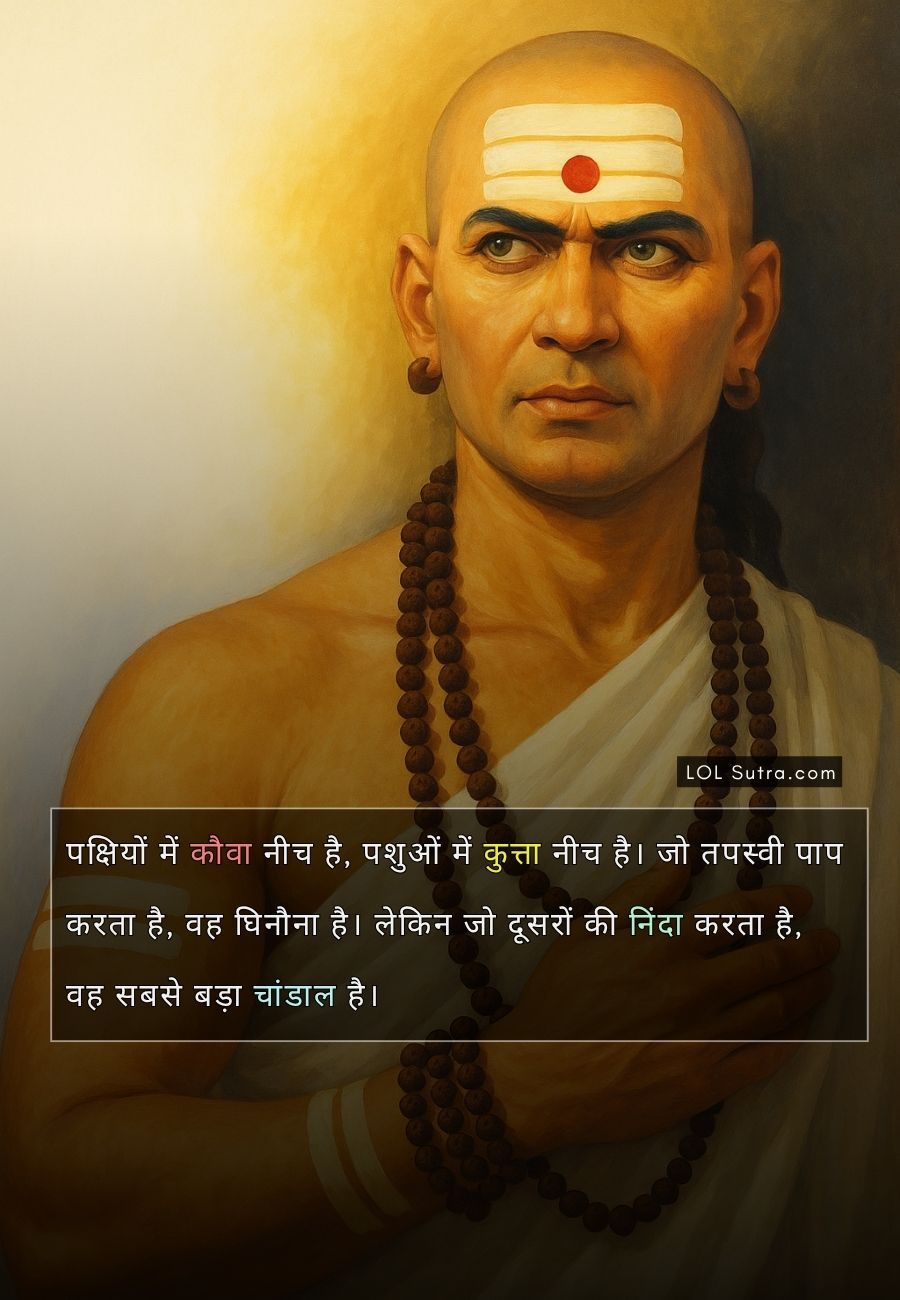
Chanakya Niti Chapter 9 teaches the wisdom of self-control, moral conduct, and spiritual strength. In this chapter, Acharya Chanakya emphasizes the importance of leaving behind desires, avoiding gossip, and living a life filled with honesty, compassion, and truth. His words remind us that discipline and righteousness lead to real freedom and peace.
चाणक्य नीति क्या है?
About Chanakya
Chanakya (c. 375–283 BCE) यानी Acharya Vishnugupta / Kautilya, नंद वंश के पतन और चंद्रगुप्त मौर्य के उदय के पीछे का master strategist, महान राजनेता, शिक्षक और अर्थशास्त्री थे। उनकी नीतियाँ सिर्फ़ राजनीति में ही नहीं, बल्कि जीवन, संबंध, व्यापार और सफलता के हर क्षेत्र में मार्गदर्शन करती हैं।
वे Takshashila University में आचार्य थे और उन्होंने Arthashastra तथा Chanakya Niti लिखी।
उनकी नीतियों का मुख्य उद्देश्य था —
- राजनीति, अर्थव्यवस्था और जीवन में सफलता पाना
- समाज और राज्य की स्थिरता
- व्यक्ति के चरित्र और निर्णय क्षमता को मजबूत करना!!
Chanakya Niti Chapter 9 | चाणक्य नीति : सातवाँ अध्याय
#1
तात, यदि तुम जन्म-मरण के चक्र से मुक्त होना चाहते हो, तो जिन विषयों के पीछे तुम इन्द्रियों की संतुष्टि के लिए भागते फिरते हो, उन्हें ऐसे त्याग दो जैसे तुम विष को त्याग देते हो। इन सब को छोड़कर, हे तात, तितिक्षा, ईमानदारी का आचरण, दया, शुचिता और सत्य — इसका अमृत पियो।
My dear child, if you wish to be free from the cycle of birth and death, abandon the objects of sense pleasure as you would abandon poison. Instead, drink the nectar of patience, honesty, compassion, purity, and truth.
#2
वे कमीने लोग जो दूसरों की गुप्त खामियों को उजागर करते हुए फिरते हैं, उसी तरह नष्ट हो जाते हैं जैसे कोई साँप चीटियों के टीलों में जाकर मर जाता है।
Those mean people who expose the secret faults of others destroy themselves, just as a snake dies when it enters an anthill.
#3
शायद किसी ने ब्रह्मा जी, जो इस सृष्टि के निर्माता हैं, को यह सलाह नहीं दी कि वे —
सुवर्ण को सुगंध प्रदान करें,
गन्ने के झाड़ को फल प्रदान करें,
चन्दन के वृक्ष को फूल प्रदान करें,
विद्वान को धन प्रदान करें,
और राजा को लम्बी आयु प्रदान करें।
Perhaps no one advised Lord Brahma, the creator, to give fragrance to gold, fruit to the sugarcane, flowers to sandalwood, wealth to the wise, and long life to the king.
#4
अमृत सबसे बढ़िया औषधि है। इन्द्रिय-सुख में अच्छा भोजन सर्वश्रेष्ठ सुख है। नेत्र सभी इन्द्रियों में श्रेष्ठ है। और मस्तक शरीर के सभी अंगों में श्रेष्ठ है।
Nectar is the best of all medicines, delicious food is the best among pleasures, the eye is the most precious among the senses, and the head is the finest part of the body.
#5
कोई संदेशवाहक आकाश में नहीं जा सकता और आकाश से कोई खबर नहीं आ सकती। वहाँ रहने वाले लोगों की आवाज़ सुनाई नहीं देती और न ही उनसे कोई संपर्क हो सकता है। इसलिए वह ब्राह्मण, जो सूर्य और चन्द्र ग्रहण की भविष्यवाणी करता है, वास्तव में विद्वान माना जाना चाहिए।
No messenger can travel through the sky, nor can any message come from it. The voices of those who dwell there cannot be heard, nor can they be reached. Hence, the Brahmana who can predict the sun and moon’s eclipses must truly be regarded as wise.
#6
इन सातों को जगा देना चाहिए यदि ये सो जाएँ —
१. विद्यार्थी
२. सेवक
३. पथिक
४. भूखा आदमी
५. डरा हुआ आदमी
६. खजाने का रक्षक
७. खजांची
Wake up these seven if they fall asleep —
The student, the servant, the traveller, the hungry man, the frightened man, the treasury guard, and the treasurer.
#7
इन सातों को नींद से नहीं जगाना चाहिए —
१. साँप
२. राजा
३. बाघ
४. डंक मारने वाला कीड़ा
५. छोटा बच्चा
६. दूसरों का कुत्ता
७. मूर्ख
Never awaken these seven —
A serpent, a king, a tiger, a stinging insect, a small child, someone else’s dog, and a fool.
#8
जिन लोगों ने वेदों का अध्ययन धन कमाने के लिए किया है, और जो नीच लोगों का दिया हुआ अन्न खाते हैं — उनके पास कौन-सी शक्ति हो सकती है? वे तो ऐसे भुजंगों के समान हैं जो दंश नहीं कर सकते।
Those who study the Vedas for money, and those who eat food given by the low-minded, have no real power — they are like serpents without fangs.
#9
जिसके डाँटने से सामने वाले के मन में डर नहीं पैदा होता, और प्रसन्न होने के बाद जो कुछ देता नहीं है — वह न किसी की रक्षा कर सकता है, न किसी को नियंत्रित। ऐसा व्यक्ति भला क्या कर सकता है?
A man whose anger inspires no fear, and whose kindness grants no reward, can neither control nor protect anyone. Such a person is useless.
#10
यदि नाग अपना फन खड़ा करे, तो भले ही वह ज़हरीला न हो, उसका यह करना ही सामने वाले को डराने के लिए पर्याप्त है। यहाँ यह बात मायने नहीं रखती कि वह जहरीला है या नहीं।
Even if a snake has no venom, raising its hood is enough to inspire fear. What matters is not the poison, but the display of power.
#11
सुबह उठकर उस काम के बारे में सोचो जो दिनभर करना है, दोपहर को अपनी माँ को याद करो, और रात को चोरों को मत भूलो।
A wise person should plan his actions in the morning, remember his mother in the afternoon, and stay cautious of thieves at night.
#12
आपको इन्द्र के समान वैभव प्राप्त होगा यदि आप — अपने भगवान के गले की माला अपने हाथों से बनाएं, अपने भगवान के लिए चन्दन अपने हाथों से घिसें, और अपने हाथों से पवित्र ग्रंथों को लिखें।
One attains prosperity equal to Indra by —
Making a garland for God with one’s own hands,
Grinding sandal paste for the Lord personally,
And writing sacred texts by hand.
#13
गरीबी पर धैर्य से मात करें, पुराने वस्त्रों को स्वच्छ रखें, बासी अन्न को गरम करें, और अपनी कुरूपता पर अच्छे व्यवहार से विजय पाएं।
Overcome poverty with patience, keep old clothes clean, make stale food fresh by heating it, and defeat ugliness through good behavior.
This chapter guides us to rise above greed, ego, and carelessness. Acharya Chanakya explains that wisdom is not in wealth, but in patience, humility, and self-awareness.
He teaches us when to act and when to remain silent, whom to awaken and whom to avoid, and how inner discipline brings strength even in weakness.
Chapter 9 is a reminder that true power comes not from status or possessions but from character, restraint, and wisdom.
Now, let’s move to Chanakya Niti Chapter 10 — where Acharya Chanakya shares deeper insights into human behavior, intelligence, and the art of living a wise life.

 and then