
7 Unusual Ways to
Improve Your Decision-Making Skills
Better decisions aren’t made by thinking harder. They’re made by thinking clearer, managing emotions, and building smarter habits.
Most people think better decision-making means becoming serious, silent, and mysterious — like a monk with Wi-Fi.
Not true. Better decisions are not always made by thinking harder. Sometimes they come from sleeping better, walking more, asking weirder questions, cooking something new, or admitting that your brain becomes a drunk committee after 11 p.m.
Decision-making is not just logic. It is energy, mood, environment, memory, emotion, and timing all sitting at the same table — usually arguing. Here are seven unusual but practical ways to make better decisions without turning your life into a business seminar.
1. Take a Walk Before You Decide
If your brain feels stuck, do not punish it by staring harder at the wall. Just walk.
A Stanford study found that walking can increase creative thinking. That means your brain may generate better options when your body is moving instead of when you are frozen in a chair like a confused potato.
Walking helps because it loosens your thinking. You stop attacking the problem directly and start seeing it from different angles. Before making a serious decision, take a 10–20 minute walk and ask yourself: What am I not seeing right now?
Your legs may not solve your life, but they can at least stop your brain from acting like a broken browser tab.
2. Never Trust a Decision Made When You Are Hungry
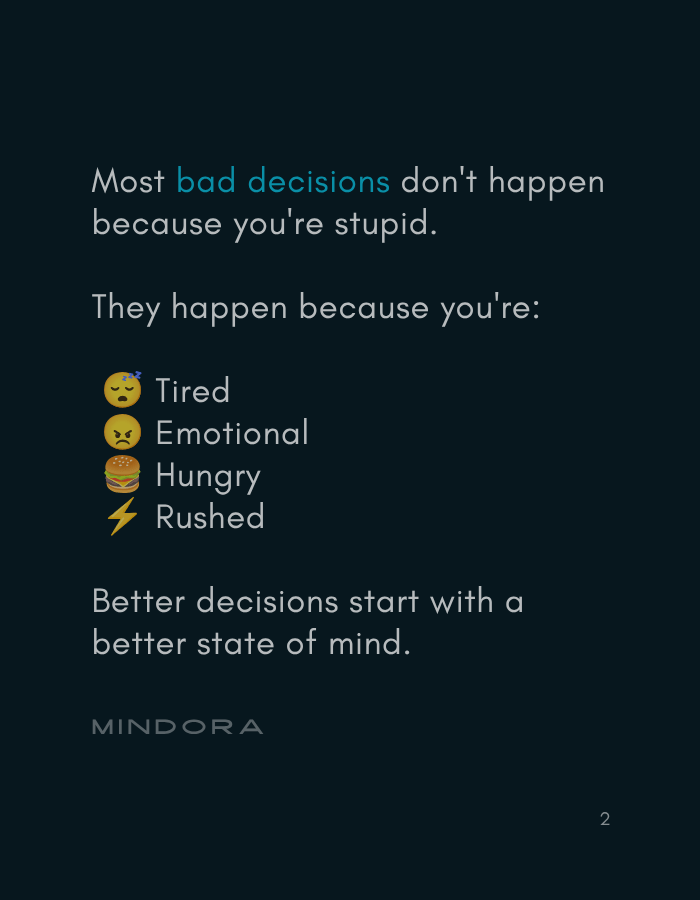
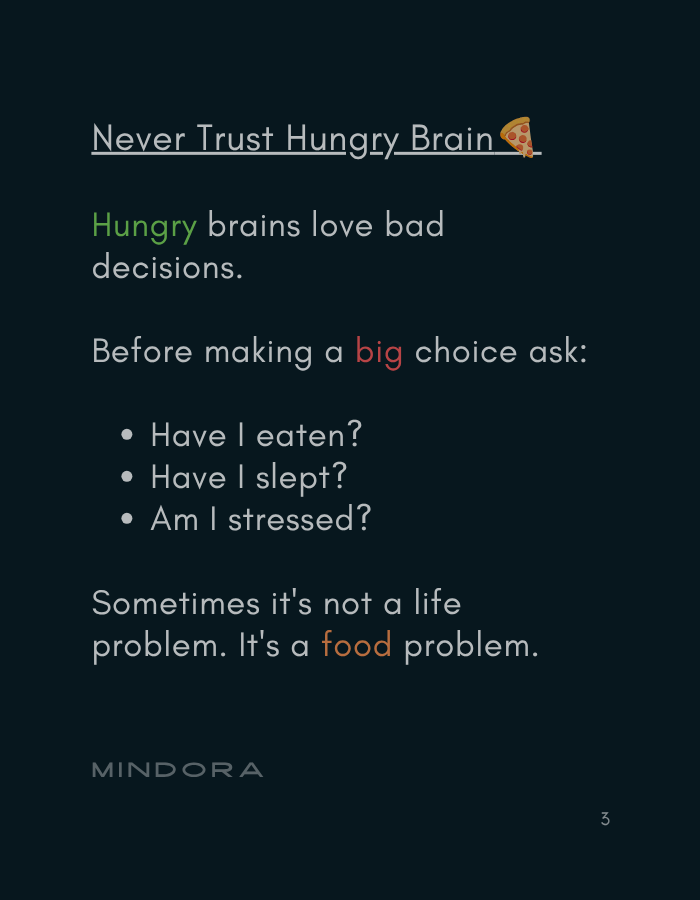
Hunger turns normal people into emotional dictators. Suddenly, quitting your job, texting your ex, ordering three burgers, and buying expensive headphones all seem reasonable. That is not wisdom. That is low blood sugar wearing a motivational hoodie.
When you are hungry, tired, or irritated, your brain looks for fast relief, not long-term truth. So before making an important choice, check your body first:
- Have you eaten?
- Have you slept?
- Have you had water?
- Are you angry?
- Are you just bored?
Sometimes your “deep life crisis” is actually just your stomach filing a complaint.
3. Name the Emotion Before Choosing
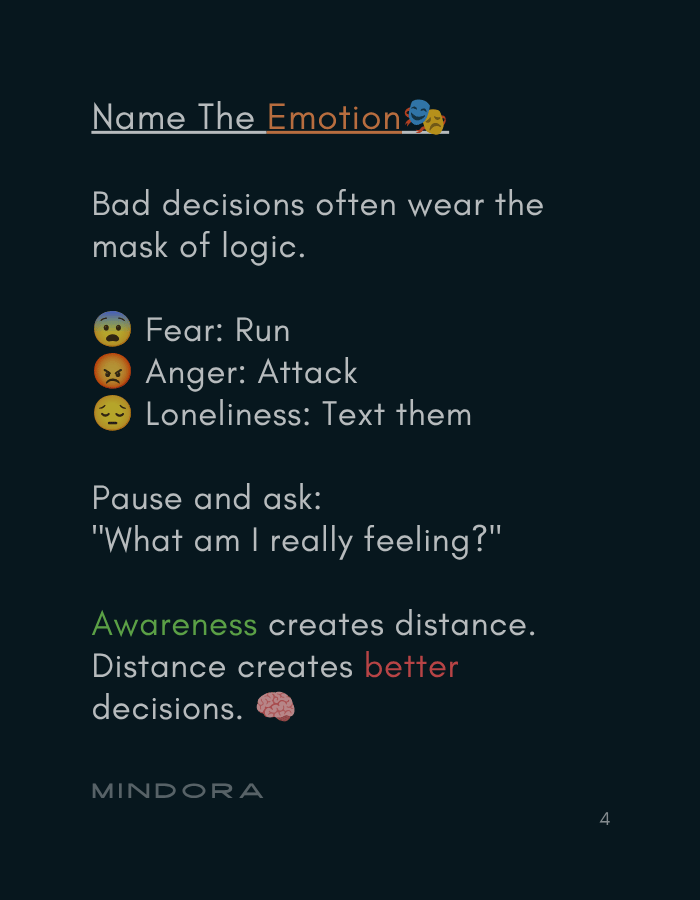
A lot of bad decisions happen because people confuse emotion with instruction.
- Fear says, “Run.”
- Ego says, “Prove them wrong.”
- Loneliness says, “Text them.”
- Anger says, “Destroy everything.”
- Your common sense says, “Can we please not?”
Before deciding, say the emotion out loud:
- “I feel rejected.”
- “I feel rushed.”
- “I feel jealous.”
- “I feel afraid.”
- “I feel pressured.”
This small step creates distance between you and the feeling. You are no longer inside the storm; you are watching the weather report.
The goal is not to remove emotion. Emotion is useful. It tells you something matters. But emotion should be a passenger, not the driver. Especially if the passenger is screaming.
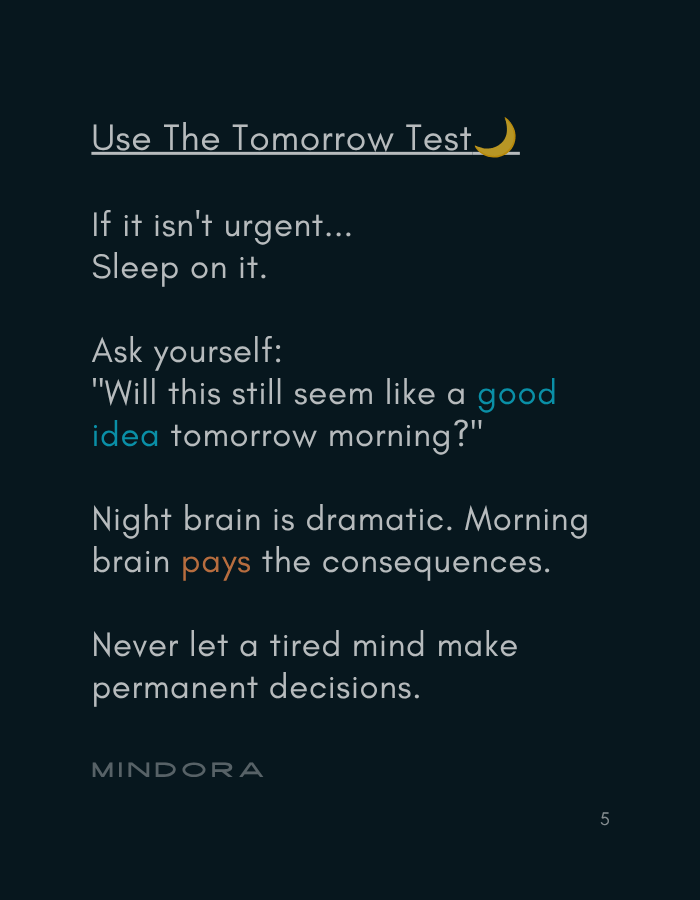
4. Use the “Tomorrow Morning Test”
Some decisions look genius at night and embarrassing in daylight. Night brain is dramatic. It writes sad poetry, makes risky purchases, and thinks one message can fix six months of pain.
So use this rule: If the decision is not urgent, sleep on it. Ask: “Will I still think this is a good idea tomorrow morning?” If yes, continue. If no, congratulations — you just avoided becoming your own villain.
Sleep helps the brain regulate emotion, organize memory, and reduce impulsive thinking. A tired brain does not calculate risk properly. It just wants relief.
Never let a tired brain sign a contract, send a paragraph, or make a life plan.
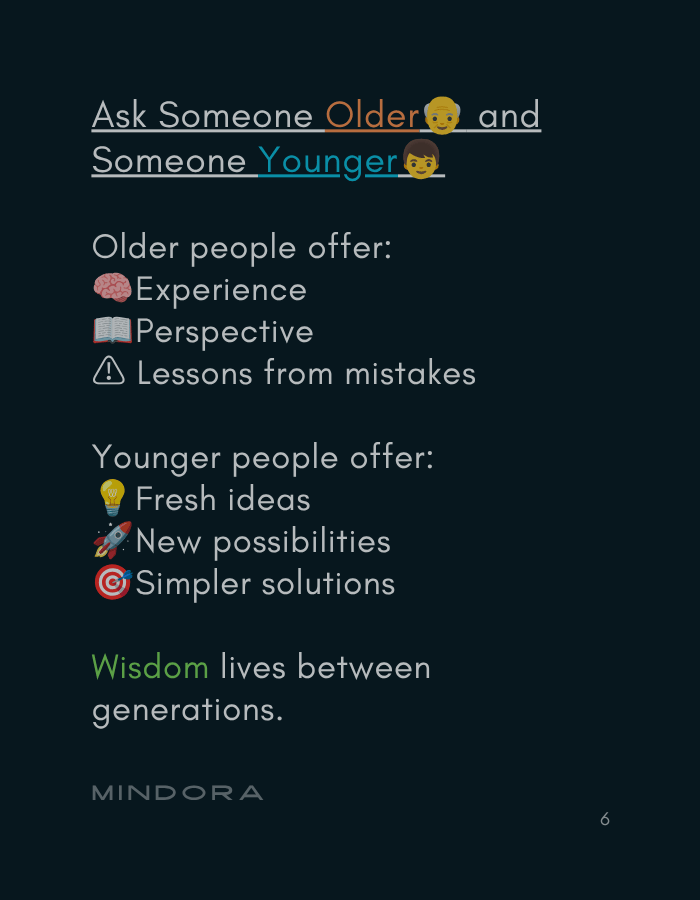
5. Ask an Older Person and a Younger Person
Most people only ask advice from people exactly like them.
- Same age.
- Same problems.
- Same confusion.
- Same bad haircut phase.
That’s bad strategy.
Ask someone older because they have already paid tuition to life. They may not know every modern detail, but they understand patterns. Regret has made them honest.
Ask someone younger because they are less trapped by old rules. They may see simple options your overthinking adult brain has buried under responsibility and rent.
Older people bring perspective. Younger people bring possibility. Together, they protect you from two dangers: being reckless and being dead inside.
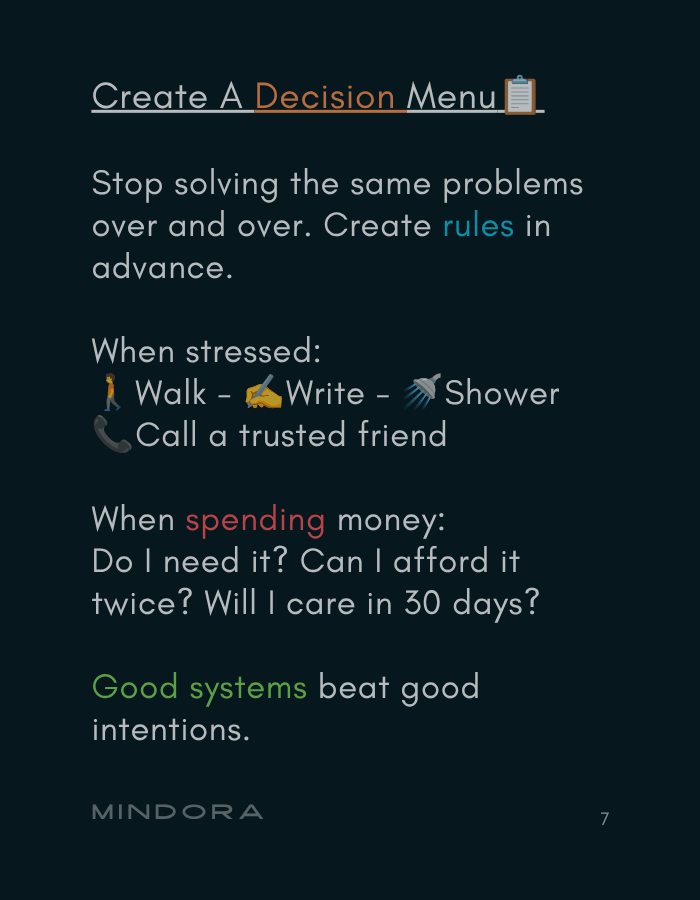
6. Create a “Decision Menu”
Restaurants understand something humans forget: too many options cause suffering. That is why menus have categories. Imagine opening a restaurant menu and seeing 4,000 dishes in one paragraph. You would not order food. You would question existence.
Your life works the same way. Create a personal decision menu for common choices. For example: When I am stressed, I will choose one of these:
- Walk
- Shower
- Write for 10 minutes
- Call one calm person
- Eat proper food
When I want to spend money, I will ask:
- Do I need it?
- Can I afford it twice?
- Will I care about it in 30 days?
- Am I buying this because I am emotional?
When I feel stuck, I will:
- Write the problem
- List three options
- Pick the smallest next step
A decision menu saves mental energy. You stop rebuilding your brain from zero every time life asks a question.
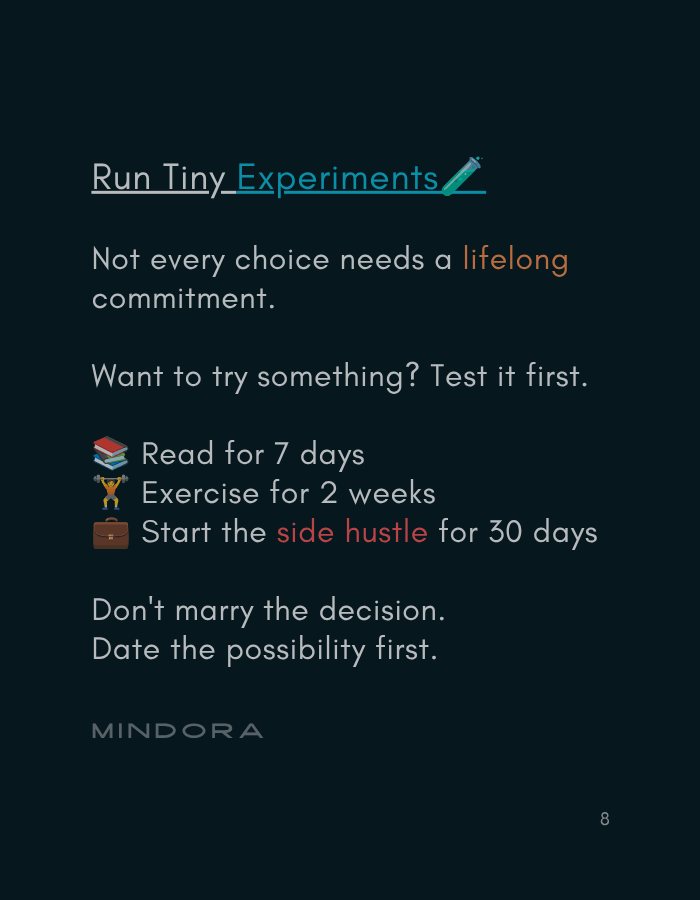
7. Make Tiny Experiments Instead of Giant Decisions
Not every decision needs a dramatic final answer. Sometimes the smartest move is not “choose forever.” It is “test for one week.”
- Want to start a new routine? Test it for seven days.
- Want to learn a skill? Try 30 minutes daily for two weeks.
- Want to change your diet? Try one clean meal per day first.
- Want to start a business idea? Make one small version before building the whole empire in your imagination.
Tiny experiments reduce fear because you are not marrying the decision. You are dating the possibility. This is powerful because many people delay decisions waiting for perfect confidence.
But confidence usually comes after action, not before it. Start small. Observe. Adjust. Life is not a courtroom where every choice needs a final verdict. Sometimes it is a kitchen. Taste, adjust, add salt, and try again.
Final Thought
Better decision-making is not about becoming a cold robot. It is about knowing when your brain is clear, when your emotions are loud, when your body is tired, and when your options are too messy.
- Walk before you panic.
- Eat before you overreact.
- Sleep before you decide.
- Ask better people better questions.
- Test small before betting big.
The quality of your life is shaped by the quality of your decisions.
And sometimes, the best decision is simply not making one while hungry, angry, lonely, tired, or convinced that midnight thoughts are sacred wisdom.
They are not. Sometimes they are just unpaid interns in your brain.
 and then